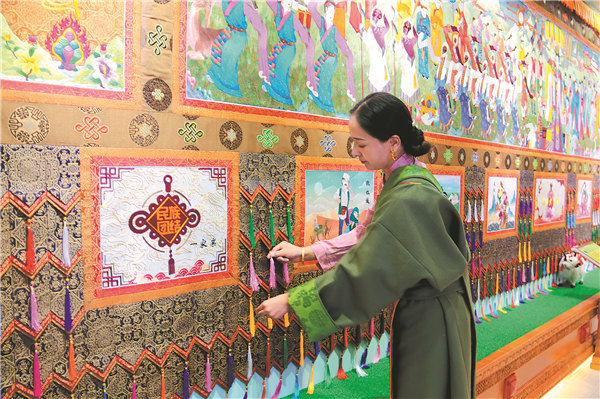
Tibetan Embroidery
Introduction
Tibetan embroidery is a traditional art form deeply rooted in the cultural and spiritual heritage of Tibet ethnic group. Known for its vibrant colors, intricate designs, and three-dimensional effects, this craft is one of the most distinctive embroidery styles among China's ethnic cultures. Originating in the 9th century, Tibetan embroidery is considered one of the three major arts of Tibetan Buddhism, alongside thangka painting and pile needlework. The art form often features religious and cultural motifs, such as the eight auspicious symbols of Tibetan Buddhism, natural landscapes, and wildlife.
Historical Background
The origins of Tibetan embroidery can be traced back to the 9th century, deeply embedded in Tibetan culture as one of the major arts associated with Tibetan Buddhism. It was traditionally used to decorate clothing and accessories, such as hair-braid decorations worn by Tibetan women. The craft is characterized by elements that reflect Tibetan culture, including depictions of Tibetan mastiffs, antelopes, girls carrying water, and the eight auspicious symbols of Tibetan Buddhism, such as the conch shell and treasure vase. The detailed and three-dimensional effects achieved through the embroidery are a testament to the skilled craftsmanship passed down through generations.
Techniques and Characteristics
Tibetan embroidery is distinctive for its use of vibrant colors and intricate designs that bring characters and symbols to life. The craftsmanship involves dieceng stitching, a layered technique that creates depth and texture, rendering a three-dimensional effect. This involves the careful embroidery of layers to follow the contours of facial muscles, resulting in lifelike facial expressions and figures. The traditional use of silk threads, initially limited in color variety, has evolved to incorporate a broader palette, aiding in the creation of more vivid and realistic depictions.
Cultural and Economic Impact
Tibetan embroidery has had a profound impact both culturally and economically. It has provided employment and training opportunities for many, especially women, allowing them to make a living through the craft. This has been instrumental in poverty alleviation, empowering communities and preserving cultural heritage. Enterprises and cooperatives have emerged, creating platforms for artisans to learn, innovate, and sell their embroidered works. Additionally, exhibitions and shows have been organized to showcase Tibetan embroidery globally, furthering its reach and appreciation.
Integration into Fashion and Contemporary Art
The integration of Tibetan embroidery into modern fashion and art has been spearheaded by brands like MUKZIN, which have used traditional elements to inspire contemporary collections. The brand's collaboration with Tibetan embroidery has brought cultural motifs into modern clothing, reflecting a fusion of heritage and contemporary design. Such efforts not only promote Tibetan cultural heritage but also introduce traditional craftsmanship to wider audiences, helping preserve the art in a modern context.








